Intelligent Visibility Across Every Production Line, Cold Room, and Loading Dock
FoodProcess AI is an enterprise AIoT system designed for the operational and regulatory demands of industrial food processing. The system integrates artificial intelligence with IoT sensing technologies — including RFID, BLE, LoRaWAN, and wireless temperature monitoring.
Connecting AI Intelligence to the Physical Plant Floor
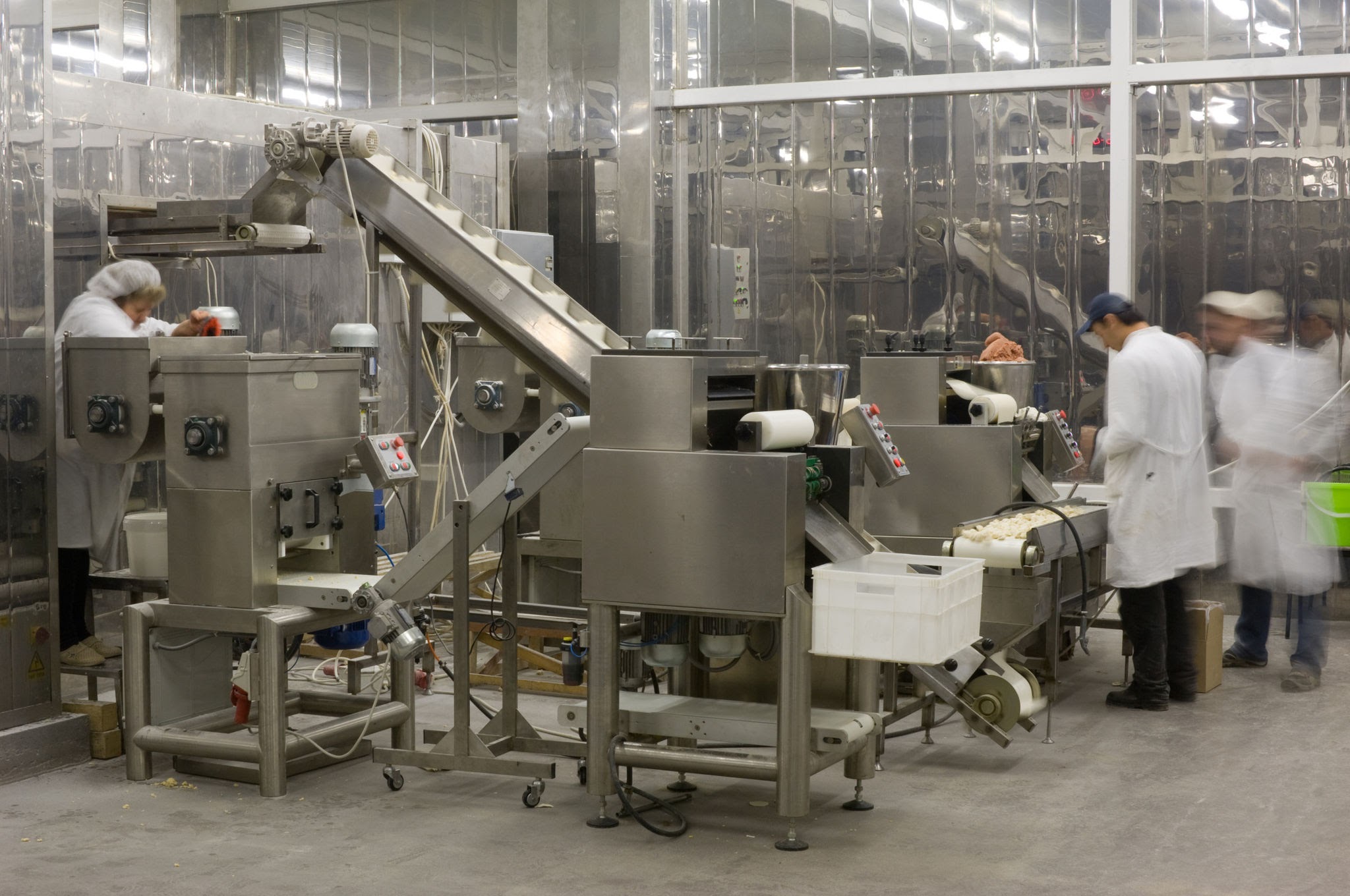
Food processing plants operate under a combination of variables that rarely appear cleanly in any single enterprise system: sanitation workers crossing raw-handling and ready-to-eat zone boundaries without documented gowning events, refrigerated trailers queued at a receiving dock while temperature-sensitive perishable ingredients wait, batch records that must link back through every co-manufacturer ingredient lot under FSMA traceability requirements, and blast freezer units drifting out of safe temperature range before the next scheduled manual check captures the deviation.
FoodProcess AI was built to close that operational visibility gap by pairing industrial IoT hardware, including passive UHF RFID tags, BLE beacons, wireless temperature probes, LoRaWAN sensors, and GPS devices, with AI models trained on the event structures and failure patterns specific to food processing environments.
The system surfaces conditions in near real time, giving operations and food safety teams the ability to answer questions that paper-based GMP logs and disconnected sensor feeds cannot resolve fast enough:
Which sanitation zone had a compliance gap during the third shift?
Which mobile ingredient tote has been absent from its allergen-controlled zone for more than two days?
Which incoming raw material lot is trending toward unexpected shrinkage between receiving and production?
Which finished goods pallet exceeded its temperature tolerance window during a dock staging transfer?
Food Processing Intelligence
The AI intelligence layer applies pattern recognition, anomaly detection, and predictive scoring across six functional domains critical to industrial food processing operations.
AI Workforce Movement Intelligence
Analyzes how production personnel, sanitation crews, and maintenance staff move through the plant relative to sanitation zone designations, raw-to-RTE segregation boundaries, and equipment proximity thresholds.
- Plant floor worker flow analytics
- Sanitation zone compliance intelligence
- Worker-equipment proximity risk AI for slicers, bowl choppers, portioners, and conveyor systems
- Shift staffing pattern optimization
AI Access Governance Intelligence
Evaluates who enters allergen-controlled zones, HACCP critical control points, and restricted cold storage areas, and whether each entry follows the documented gowning, changeover, and authorization sequence.
- Allergen zone entry risk scoring
- Credential anomaly detection AI
- HACCP zone access pattern analytics
- Visitor and contractor risk profiling
AI Asset Utilization Intelligence
Tracks how processing equipment, mobile ingredient carts, CIP skids, and production line assets are being used, misallocated, or left idle across shifts and product changeovers.
- Processing equipment utilization analytics for filling lines, retorts, homogenizers, and packaging machines
- Mobile asset loss prevention AI
- Predictive maintenance scoring using vibration spectral data from conveyor drives and pump bearings
- Asset downtime root cause analysis
AI Inventory Demand Intelligence
Addresses raw material and ingredient loss between the receiving dock and production line, one of the most persistent and costly blind spots in food manufacturing.
- Raw material depletion forecasting
- Ingredient shrinkage detection AI
- Batch yield optimization analytics across trimming, portioning, and filling stages
- Demand-driven replenishment intelligence
AI Production Flow Intelligence
Monitors work-in-progress as batches move through marination, thermal processing, blast chilling, and secondary packaging stages.
- WIP bottleneck prediction analytics
- Production line balancing AI
- Batch cycle time optimization
AI Traceability and Cold Chain Intelligence
Links lot genealogy, cold chain temperature history, and recall scope determination into a single queryable record, compressing what traditionally requires days of manual reconstruction into a near-real-time query result.
- Lot traceback pattern analytics
- Cold chain excursion prediction AI
- Recall scope determination intelligence
Food Processing IoT Software
Purpose-built IoT software modules manage the sensing hardware deployed across the facility, organized into five functional groups:
Workforce Tracking Software
- BLE badge registration and reader zone boundary configuration
- Sanitation compliance event logging at handwashing stations, gowning rooms, and boot wash checkpoints
Access Control Management Software
- Allergen zone permission rules and entry protocol sequence configuration
- Full credential lifecycle management for employees, contract sanitation crews, maintenance contractors, and third-party auditors
Asset and Inventory Tracking Software
- RFID and BLE tag registration for processing equipment and mobile assets
- Bin-level and lot-level raw material stock tracking with real-time discrepancy flagging
WIP and Traceability Software
- Batch tracking rule configuration
- Automated lot genealogy capture at each RFID and barcode scan handoff point
Cold Chain Monitoring Software
- Wireless temperature probe logging frequency, data retention, and probe-to-location mapping
- Alert threshold and escalation logic distinguishing refrigeration deviations from transient door-open events
Connected Food Equipment
FoodProcess AI supports sensing and identification hardware specified for the environmental conditions of food processing facilities, paired with AI-enabled operational technology configurations for specific plant floor use cases.
Physical Sensing and Identification Devices
IP67-rated passive UHF RFID tags (860-960 MHz) for ingredient bins and finished goods pallets
BLE beacons for worker badges and mobile asset tracking
Wireless temperature probes rated for blast freezer operation to minus forty degrees Celsius
Industrial barcode scanners for dock and production floor lot capture
AI-Paired Wireless Technologies
AI and RFID for pallet movement tracking and allergen zone access verification
AI and BLE for worker proximity sensing near slicing and portioning equipment and for shift-end equipment check-in
AI and LoRaWAN for continuous cold storage monitoring across large refrigerated complexes and vibration analysis on mixing, conveying, and filling equipment
AI and GPS and Cellular for yard trailer dwell time management and remote bulk ingredient tank level monitoring
Edge System Integration for Food Processing
FoodProcess AI addresses the network variability common to older converted plants and co-manufacturing facilities with two deployment models and a structured integration device.
Deployment Models
- Cloud version for organizations centralizing AIoT data across multiple processing facilities
- On-premises server version for plants requiring local data residency for HACCP documentation control or connectivity continuity
Edge Intelligence and Middleware
- Edge data normalization layer using MQTT and REST API protocols across heterogeneous sensor types
- Sensor-to-AI middleware orchestration routing each event stream to the correct scoring model
System Connectivity
- ERP and MES synchronization structured around ISA-95 data models for inventory counts, batch genealogy records, and AI-generated corrective action triggers
- Multi-plant data interoperability across facilities with different production line configurations, allergen zone layouts, and cold storage devices
Built on Two Decades of Industrial IoT Deployment Experience
FoodProcess AI was developed within Aperture Venture Studio with support from GAO, drawing on close to two decades of IoT deployment work across thousands of customers and thousands of completed projects in industrial food processing and adjacent manufacturing sectors.
Sustained R&D investment underpins AI models, IoT software, and edge integration device
Stringent quality assurance processes meet the documentation and reliability standards of FSMA, HACCP, SQF, BRC, and FSSC 22000 regulated environments
Ph.D. professionals from leading research universities lead the system team
Strategic partnerships and investment support deployment at enterprise scale
Engagements with Fortune 500 food manufacturers, established R&D organizations, prestigious universities, and U.S. and Canadian government agencies
Expert technical support available both remotely and onsite
Technical Evaluation
Plant operations, food safety, maintenance, and IT infrastructure teams evaluating an AIoT system for industrial food processing are encouraged to request a technical walkthrough covering workforce movement intelligence, allergen zone access governance, asset utilization, ingredient inventory demand, production flow, and traceability and cold chain modules, along with a review of which connected equipment configurations and edge deployment model best fit the facility’s existing infrastructure, regulatory obligations, and GFSI certification requirements.